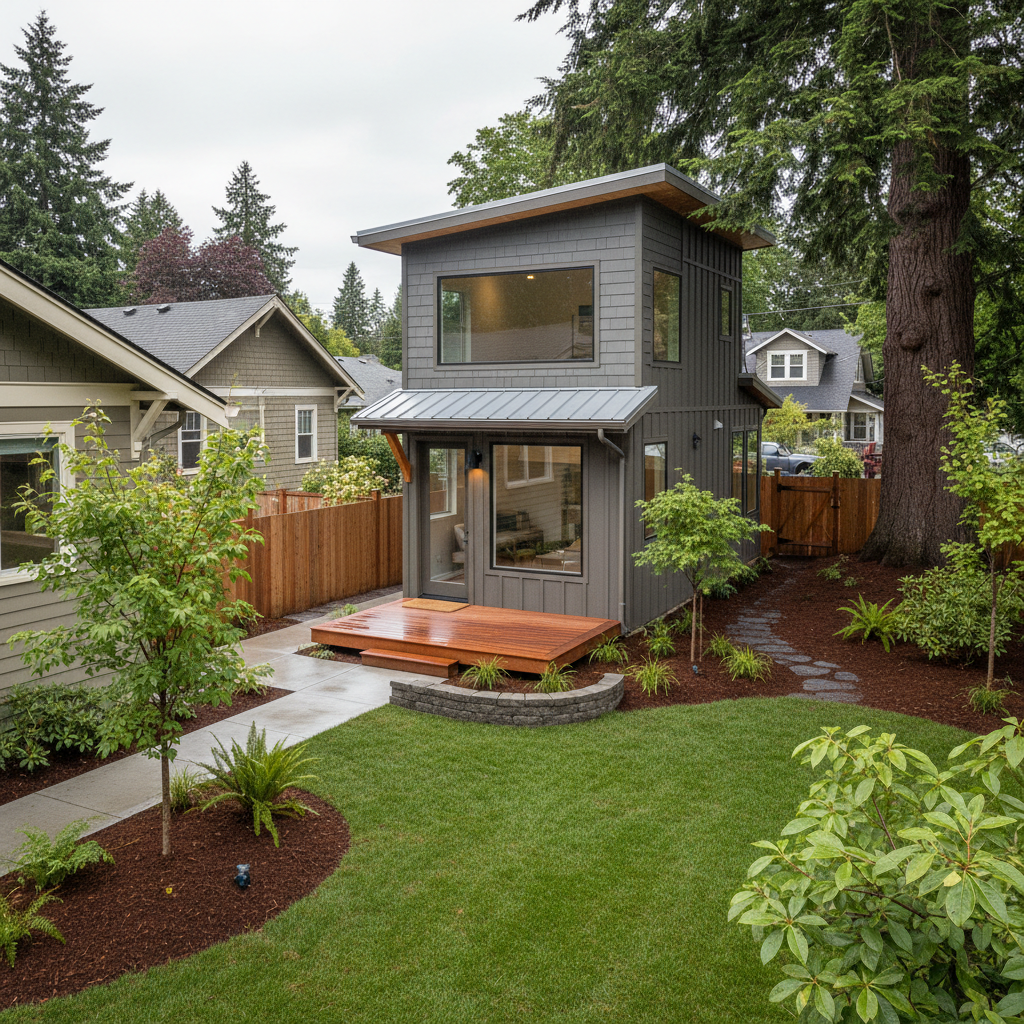
So, you've decided to build an ADU. Awesome! It's a really smart move for a lot of Portland homeowners. But before you even think about swinging a hammer, there's a super important step that often gets overlooked or, frankly, messed up: the engineering. I've seen it happen countless times – homeowners making some pretty common blunders when it comes to the engineering side of things. And trust me, those mistakes can cost you big time in delays, frustration, and cold, hard cash.
Mistake #1: Not Really Grasping Why Engineering Matters
A lot of folks think engineering is just a necessary evil, just another box to check for the city. And sure, it is a requirement. But it's way more than that. The engineer is the one making sure your ADU actually stands up, doesn't slide down a hill, and can handle whatever Portland weather throws at it – everything from those heavy winter rains to the occasional summer heatwave. They're designing the foundation, the framing, the roof structure, and sometimes even the plumbing and electrical systems to make sure everything's safe, works efficiently, and meets code. If you don't really get this, you're more likely to cut corners or question their recommendations, which is, well, a recipe for disaster.
Mistake #2: Picking the Wrong Engineer for Your Project
Not all engineers are created equal, especially when we're talking about residential ADUs. You wouldn't hire a brain surgeon to fix your broken leg, right? It's the same idea here. Some engineers specialize in big commercial buildings, others in bridges, and some are really good at residential structures like ADUs. You need someone with actual experience in local residential construction, someone who knows Portland's specific seismic requirements, our soil conditions (especially if you're building on one of those sloped lots in Southwest), and the quirks of our local permitting office. Ask them about their ADU experience. Ask for references. A good engineer will have a portfolio of similar projects they can show you, no problem.
Mistake #3: Just Going for the Cheapest Bid Without Doing Your Homework
Everyone wants to save money, I totally get it. But engineering is definitely not the place to pinch pennies. A super low bid might seem attractive, but it could mean a few things: maybe the engineer is inexperienced, they're cutting corners on the scope of work, or they're going to hit you with a ton of change orders later. A detailed engineering plan actually prevents costly surprises during construction. If you get a bid that's a lot lower than others, dig deeper. Ask what's included, what's not, and what their process is for revisions. A good engineer will be upfront about their fees and exactly what you're getting for your money.
Mistake #4: Not Connecting Engineering with Design and Construction
This is a big one, folks. I've seen homeowners get their architectural plans drawn up, then hand them off to an engineer who works in a vacuum, and then try to bring it all to a contractor. The problem? The engineer might design something that's difficult or overly expensive to build, or the architect's vision might not even be structurally feasible. The best approach is to have your engineer, architect, and even your general contractor (like us at Mighty ADU Company) talking early and often. We can flag potential issues before they become expensive problems. For example, if your architect designs a huge open span, the engineer might need a massive beam, which then impacts ceiling height or adds significant cost. Catching that early saves everyone a headache, believe me.
Mistake #5: Ignoring Geotechnical Reports (Soil Tests)
Especially in Portland, with our varied soil types – everything from dense clay to loose fill – a geotechnical report can be absolutely crucial. Some homeowners skip this to save a few hundred bucks, but it's a real gamble. A soil test tells the engineer what kind of foundation your ADU needs. Without it, they might over-design the foundation (costing you more in concrete and rebar) or, worse, under-design it, leading to settlement issues down the road. If your property has any slope, or if you're building near an existing structure, a geo report is non-negotiable. It's an investment in the long-term stability of your ADU, pure and simple.
Look, engineering isn't the flashiest part of building an ADU, but it's the backbone. Get it right, and the rest of your project will go a lot smoother. Skimp on it, and you're just asking for trouble.